

 Marketplace
 Jobs
Jobs Motors
 Property
 Services
 Business For Sale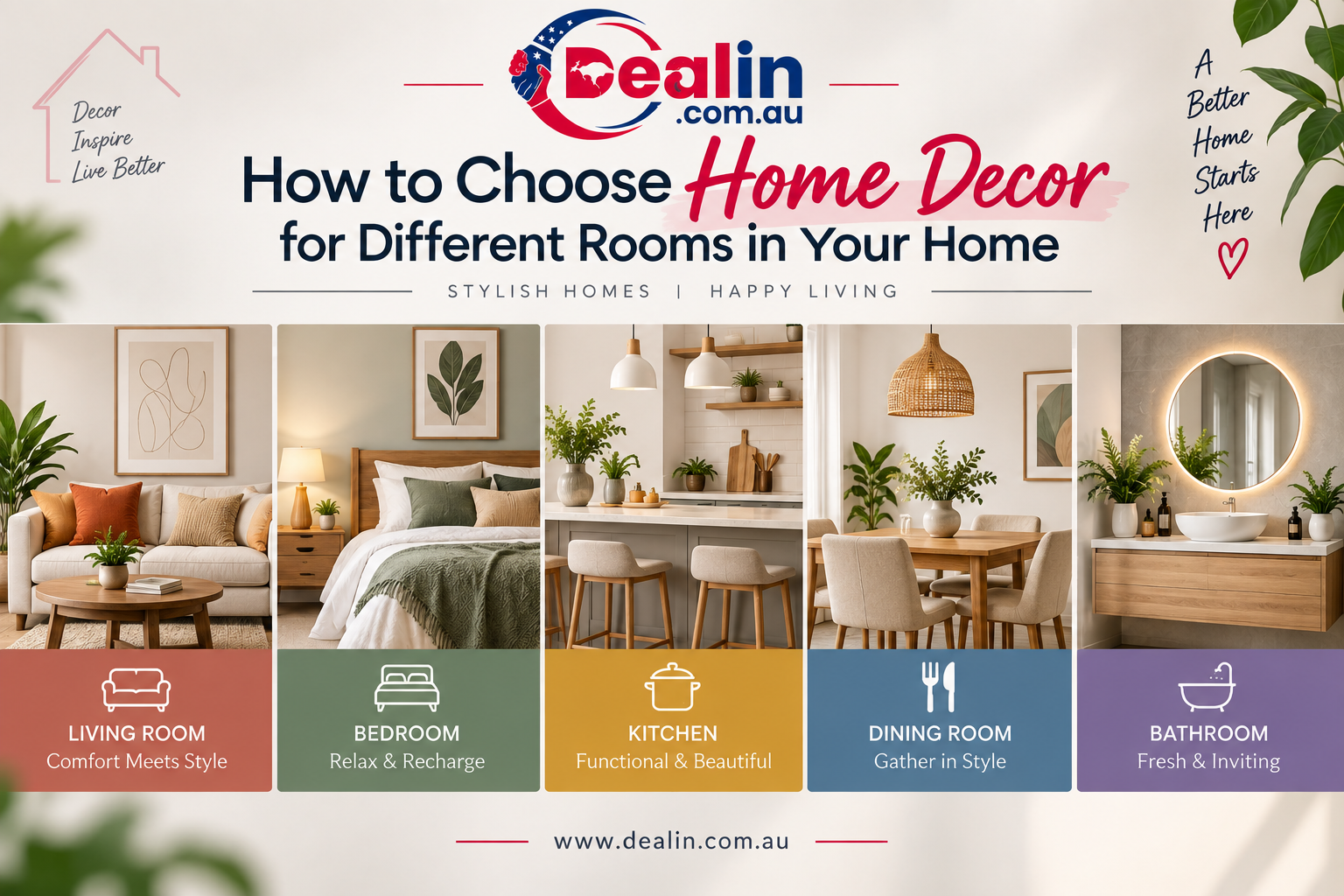



How to Choose Home Decor for Different Rooms in Your Home
There are a lot of folks out there who attempt to make their entire house look the same, with the same palette, materials, ambience, room to room. On paper it's a neat concept. In reality, it seldom works out this way as each room may actually require a different kind of decoration, both in style and for its purpose.
A living room should be able to accommodate socialising and relaxation. A bedroom should be soothing, and even a little bit tranquil in order to be able to sleep in it. Your kitchen should be able to withstand splashes, high temperatures and constant use. If you treat them all as the same, you're not looking at what each room is actually used for. The better solution is not the same style anywhere – it's a common thread, a colour, a material, a tone or a mood that brings rooms together without one taking over the other.
Living Rooms: Built for How People Actually Use Them
The living room is typically the most decorated room in the house and often is the room that is given least consideration when it comes to function, instead focusing on what it looks like in pictures.
Start with seating that matches how the room genuinely gets used. Whether people sit there to eat, sit there to watch TV, or in rare cases, gather a small crowd, a sofa with a deep, soft seat in a sturdy fabric is more important than a design statement. Performance fabrics, ones treated to resist stains and wear, are genuinely worth the extra cost if you've got kids, pets, or you just eat on the couch more often than you'd admit.
Lighting in a living room needs to do at least two jobs, bright enough for general use, dim and warm enough for evenings. A single overhead light rarely achieves both. Layering a floor lamp or table lamps alongside your main light gives you flexibility a single fixture can't.
And this is the room where a rug matters most, because it's usually the largest single decorative decision in the space. Get the size right, front legs of the sofa and chairs should sit on it at minimum, and it anchors everything else in the room instead of leaving furniture floating disconnected on bare floor.
Bedrooms: Calm Should Win Over Trendy
Bedrooms are where people consistently over-decorate for how a room looks in a photo and under-decorate for how it needs to feel at 11pm when they're trying to switch off.
Here, colour plays an important part and it's not wise to be too stimulating on the main walls. Soft, muted colors, neutral and warm, dusty blues, soft greens, tend to help true rest more than anything else that's bold and high contrast. Use bright colors for accents, pillows, a painting, etc. but not on walls or bedding where you are looking at it night after night.
Lighting is arguably more important in a bedroom than almost any other room, and it's the one place worth avoiding harsh overhead lighting entirely if you can. Bedside lamps with warm-toned bulbs do more for a bedroom's actual atmosphere than any single piece of decor you could buy.
Texture is where bedrooms can really use a little thought, a little more than layering beds, a soft throw, a textured headboard, a textured headboard is something you touch every day, rather than just see. A bedroom with a good feel is more important than a bedroom with a good picture.
Kitchens: Decor That Can Survive Actual Cooking
Kitchens are the room where it's essential that it stand up to heat, splashes, grease, frequent use, and an abundance of decoration that's pretty in a showhome.
Open shelving is beautiful in pictures, it's definitely more difficult to keep tidy in a usable and active kitchen, everything on it collects dust and grease faster than a cupboard and it must be done up to be beautiful or it just looks cluttered. It's best if you really like the appearance, above or close to cooking areas used regularly, and not just for the show.
Material choice matters more here than in almost any other room. Wooden chopping boards or decorative bowls used as display pieces should genuinely be treated for kitchen use, not just decorative softwood that'll warp near a sink. Textiles, tea towels, table runners, hold up better in patterns and darker tones that hide the inevitable stains, rather than pristine white pieces that show every mark within a week.
Lighting has a real impact here as well as decoration – lighting over benches can make a world of difference, as can lighting over the stove, to the everyday enjoyment of a kitchen – the two top things to consider if you have to choose are task lighting and good quality pendant lighting, in that order.
Bathrooms: Small Space, High Humidity, Different Rules
Bathrooms are the room most likely to have decor mistakes caused by ignoring humidity, and it's worth taking seriously before buying anything for this space.
Anything wooden in a bathroom needs to genuinely be suited to humidity, either sealed timber or specifically treated for wet areas, otherwise it warps or grows mould within months. The same goes for any artwork or decorative pieces with paper elements, framed and properly sealed behind glass, or they don't belong in here at all.
Colour in a bathroom can afford to be a bit bolder than in a bedroom, since it's a room people spend less continuous time in, and a striking colour or pattern in a small bathroom often reads as intentional and stylish rather than overwhelming, in a way it might not in a larger, more lived-in space.
Storage-as-decor genuinely works well here, a nice woven basket for towels, an open shelf with neatly arranged products, does double duty as both function and decoration in a room that's often short on space for purely decorative pieces.
Home Offices: Decor That Supports Focus, Not Just Looks
Home offices are a relatively newer category for a lot of Australian homes, and the decor mistakes here are usually about prioritising how a space looks on a video call over how it actually feels to work in for hours.
Wall colour and art behind you matter for video calls, sure, but the more important decorating decision is what's actually in your eyeline while you work. The clutter and visual complexity in your line of sight are a real challenge to concentration, so use the least busy wall in front of you and put more decorative, busy elements to the sides or behind you.
Lighting again is a factor which is hugely important and under-used, over head lights are good for general work but not for close work such as reading or writing, where a proper desk lamp is better, and if possible a desk should be positioned so that it is lit by natural light without the light falling on a screen.
The Thread That Ties It All Together
None of this means each room should be in a completely different, standalone style. The rooms that feel good to live in are often similar in some way, whether it's a recurring color, a specific surface (such as a warm timber or brass hardware), a total ambiance, or all four – they all have something in common which, while they may all be the same color, the same material, the same mood, or all four, they still respect what each individual room actually needs to operate well. A calm bedroom and a lively, strong living room can definitely go together and the same person can have both, as long as there's a thread connecting the two, and not each one as a whole on its own.
The real skill in decorating room by room isn't picking a different beautiful thing for every space, it's understanding what each room genuinely needs to do for you, and choosing decor that supports that first, with how it looks coming second.
If you're ready to start shopping room by room, browse home decor listings, new and second-hand, across Australia on Dealin.com.au and find pieces that genuinely suit each space in your home.
FAQs
Written By
This article is by the Dealin Team — the editorial crew at Dealin, Australia's classifieds platform for buying and selling across Motors, Property, Jobs, Marketplace, Services, and Business For Sale. We write for everyday Australians navigating the classifieds space. Have a question, or would you like us to cover a specific topic? Email us at info@dealin.com.au .


