

 Marketplace
 Jobs
Jobs Motors
 Property
 Services
 Business For Sale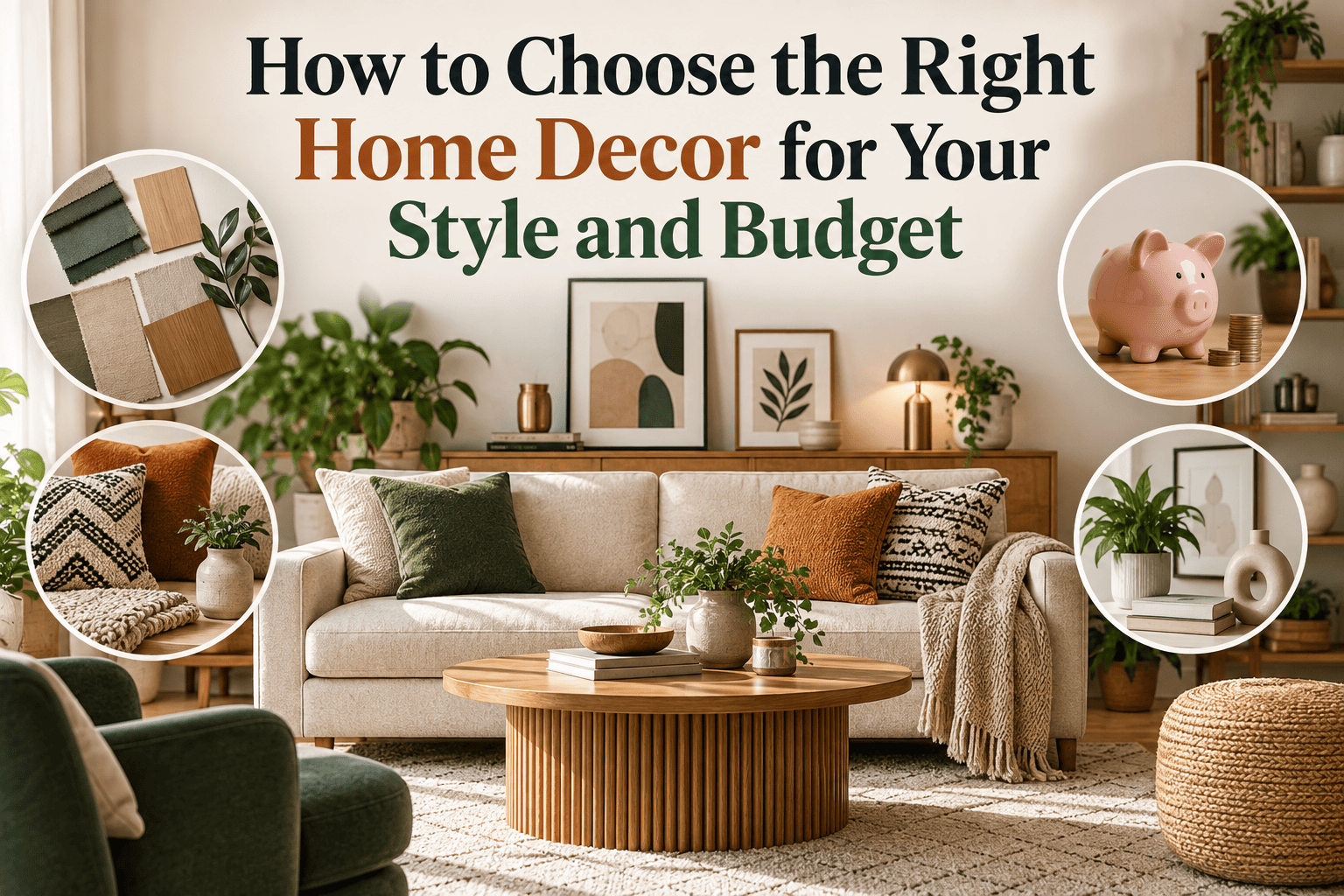




How to Choose the Right Home Decor for Your Style and Budget
Here's the thing nobody tells you before you start decorating: most expensive mistakes aren't about bad taste. They're about buying for a version of your life you don't actually have. That linen sofa in the styled photo? Gorgeous. Also a disaster if you've got kids, a shedding dog, or a habit of eating dinner on the couch most nights.
Before you look at a single cushion, be honest about how a room genuinely gets used. Not the one night a year you host people, every other day. A beautiful piece that can't survive daily life gets swapped out within a year or two, and that's a worse financial outcome than something a little less exciting that just lasts.
Working Out Your Actual Style
Most people can name a style that they like the look of, however fewer people would stop to think if that style was right for their space or the amount of maintenance that they are willing to do for it.
Instead you could look at the last twenty pictures of interiors that you have liked — the ones that made you think "I could really see myself living there", not the aspirational ones. What trends do you see? Does it seem to lean towards warm timbers or minimal surfaces? Maybe layered textures and patterns? The most common trends will point you in the direction of the style that you are drawn to.
Another thing to consider is that very few people decorate their homes to a single style. A predominately Scandinavian room with a couple of warm pieces, or industrial essentials mixed with textiles will create a room that feels lived in and homely, rather than a rigid adherence to one aesthetic. You may want to create something that feels like you, rather than a generic hotel room.
Budgeting Without Kidding Yourself
Décor budgets fall apart the same way almost every time. People plan for the big pieces — the sofa, the dining table — and then three months in discover the small stuff, cushions, throws, rugs, lighting, artwork, has quietly eaten another 20 to 30% on top. It's not a discipline problem. It's that nobody plans properly for how fast the little things add up.
A split that works reasonably well for most living spaces: around 60 to 70% on structural furniture, the rest on layering, textiles, art, lighting, decorative pieces. That second category is also where second-hand buying earns its keep — a well-made vintage lamp or a nice rug picked up secondhand can look every bit as intentional as something new, for a fraction of the price.
One rule that genuinely saves people money and regret: spend where the wear is highest, save where it isn't. A sofa you sit on daily deserves a stretch in your budget. A decorative side table you occasionally rest a coffee cup on doesn't. This single idea prevents more decorating disappointment than anything else here.
Colour Decides More Than People Realise
Most people underestimate the impact of colour on a room and it has a disproportionate influence. Warm neutrals — beige, warm white, taupe — tend to be inviting regardless of the amount of natural light that the room receives. A bold cool white colour can be eye-catching in a bright north-facing room, and it can feel a bit stark in a darker room.
Therefore, try it before you commit. Bring paint swatches (or fabric samples) into the room and see how the colour looks in the light during the day and in the evening. A beautiful wall in the morning might be a different one in the evening.
A guideline that is effective in most rooms: select one dominant neutral and then select one or two accent colours that you personally like and keep repeating them — a cushion here, a piece of art there, a vase somewhere else. Why do five different colors scattered about rarely make for a restful scene? Two colours that are repeated on purpose, do.
Getting Scale Right the First Time
This is the kind of mistake that is much harder to remedy in the future. Buying the wrong colour cushion, you can just replace that next week. But buying a sofa that is too big, or a rug that is too small, will end up looking really awkward and costly to replace.
Measure your space before buying anything. Even better yet, measure the exact distance on the floor. Rugs are commonly bought too small in Australia — people end up with a rug that only covers up their coffee table, when all the other furniture is placed awkwardly around the room. This would make the room look even smaller than it already is. Spend a little more to get the right size — at the very least the front legs of your sofa and chairs should be on top of the rug. It truly does make a difference in the overall look of your room.
You Don't Need to Buy Everything New
Not everything in a well-furnished room was purchased for that particular area. Sometimes the best decision is to go through your home and see what pieces of furniture or decor would look much better in their new homes. Other times it is cheaper and more efficient to completely re-upholster an old piece of furniture that, while sturdy, simply doesn't match anything else in its current room.
One other way to make sure that everything doesn't look like it was bought at the same store on the same day, is to mix new pieces with older or second-hand ones. Decide which items in the house actually need to be replaced and which ones just need to be updated a little bit — and allocate your money for the items accordingly.
Bringing It Together
None of this is rocket science, but it does require a decent amount of honesty. Decorate for how you really live, not how you'd like the picture of your home to be. Figure out your actual taste instead of chasing trends. Budget your money in a way that isn't just blowing it all on the furniture and forgetting everything else. Test out the colours before you commit to anything. Get the scale right before you buy anything. And don't be shy about mixing and matching things you already own, or something you've found second hand.
Do all those things and a room comes together properly — not just a collection of individually nice things that never come together, but something that feels like a home for you instead.
If you're looking to furnish with a bit more intention, check out home decor listings across Australia, new and second hand, on Dealin.com.au and find pieces that fit your style and budget.
FAQs
Written By
This article is by the Dealin Team — the editorial crew at Dealin, Australia's classifieds platform for buying and selling across Motors, Property, Jobs, Marketplace, Services, and Business For Sale. We write for everyday Australians navigating the classifieds space. Have a question, or would you like us to cover a specific topic? Email us at info@dealin.com.au .


