

 Marketplace
 Jobs
Jobs Motors
 Property
 Services
 Business For Sale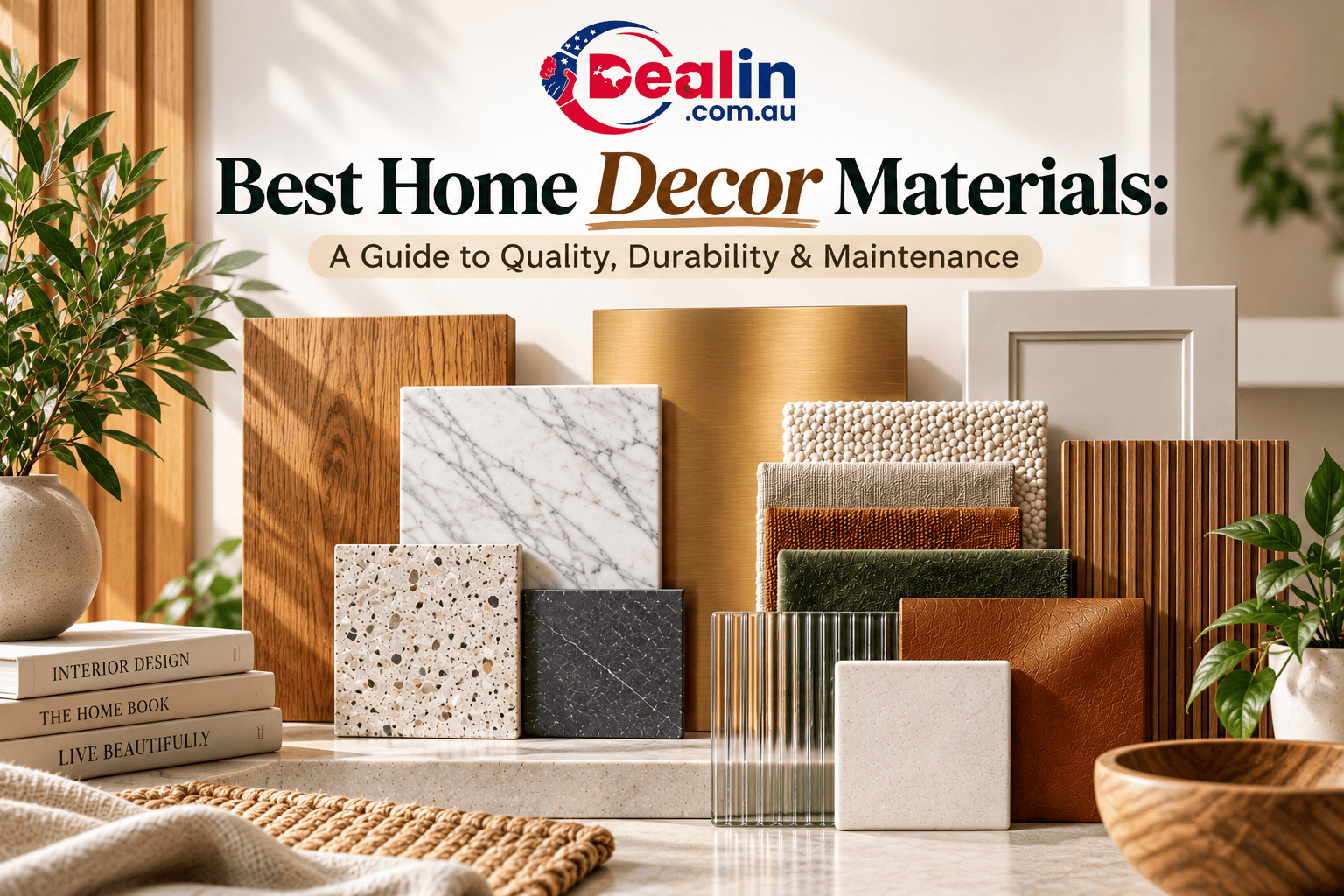




Best Home Decor Materials: A Guide to Quality, Durability & Maintenance
Most people find out what a décor piece is actually made of the hard way, usually about eighteen months after buying it, when the veneer starts peeling at the corner or the "solid brass" lamp base turns out to be plated metal underneath. Material quality is the least glamorous part of the purchasing process by any means, and it also serves as the primary criterion for determining the item's durability over ten years or its abandonment within two years.
This isn't about chasing the most expensive option every time. Plenty of budget-friendly materials hold up beautifully if you understand their limits and plenty of expensive pieces are poorly made underneath a nice finish. The goal here is knowing what you're actually buying and what it needs from you to last.
Timber: The Material Everyone Assumes They Understand
Wood is probably the most misunderstood material in home décor, mostly because "wood" gets used as a catch-all term for wildly different things. Solid timber, veneer and engineered wood are three genuinely different products and knowing which one you're looking at changes everything about how it'll age.
Solid timber — oak, walnut, blackwood — is the real thing all the way through and it's worth the premium for pieces you'll keep long-term, a dining table, a bed frame, anything that gets daily use. It can be sanded back and refinished if it gets scratched or dated-looking, which is a real advantage over time — most solid timber furniture in Australia can be restored rather than replaced. The trade-off is weight, cost and sensitivity to humidity. Solid timber expands and contracts with moisture, which matters more in some parts of Australia than others. The wetness of the coastal environment has an impact on the behavior of solid timber relative to a dry inland climate in Queensland or northern New South Wales.
Veneer — a thin outer layer over a more affordable inner core material — has a bad rap. Good veneer on a solid core can be nearly impossible to tell from solid wood, and is significantly cheaper than particleboard. The problem is that the veneer can't be sanded back more than once or twice before you hit the substrate underneath, so it doesn't have the same long-term restoration potential. It's a perfectly reasonable choice for a piece you don't expect to keep for thirty years, just don't expect to refinish it repeatedly the way you could with solid timber.
Engineered wood and particleboard sit at the budget end and they're fine for what they are, as long as you're realistic about it. These materials don't handle moisture well at all — a particleboard cabinet base in a bathroom or a laundry is asking for swelling and warping within a year or two. They're suited to dry indoor spaces and lower-cost furniture you don't expect to move house with repeatedly, since they don't hold up well to being disassembled and reassembled multiple times either.
Metal: Where Weight Tells You More Than Looks
Metal décor — lamp bases, shelving brackets, drawer hardware, decorative frames — is one of the easier materials to misjudge from photos alone, because a cheap chrome-plated piece and a solid brass one can look nearly identical in a listing image.
Weight is genuinely the best indicator you have without seeing something in person. Solid metal feels noticeably heavier than a hollow or thinly plated equivalent — and if you're buying secondhand in Sydney or from a private seller, asking about weight, or asking them to knock on it and describe the sound (a solid thud versus a hollow ring), tells you more than any written description will.
Brass and copper can form a natural patina over time, which is loved by some and entirely hated by others who would rather get something that's lacquered to prevent tarnishing. If purchasing brass hardware or fixtures, inquire what type of finish you will be receiving — sometimes you will need to polish raw brass while lacquered brass will need less polishing once the lacquer wears off, which may still need repair.
Stainless steel is the easiest to care for of any metal as it doesn't rust or corrode. This is particularly appealing in areas of the home where moisture is a frequent occurrence, such as kitchens and bathrooms. Chrome-plated steel comes in as a less expensive option, but doesn't last as long — in some areas peeling back to show rusting underneath. When purchasing fixtures — particularly second-hand — check for any chips on chrome-plated steel before purchase.
Fabric and Textiles: Where Maintenance Reality Matters Most
This is where it's most important to differentiate between "looks nice in a photo" and "survives real life" — since texture, weight and durability is just not seen on a screen.
Natural fibres — cotton, linen and wool — breathe well and often feel more premium home decor in Australia, however there are some real maintenance issues to consider. Linen is a fabric that is prone to wrinkling and may not be easy to maintain looking neat and crisp without proper care. Wool rugs are surprisingly stain-resistant, as well as durable — though proper vacuuming is important, as too powerful a vacuum can strip fibres away over time.
Synthetic fibres — polyester, nylon and olefin — have improved dramatically in recent years and are now the sensible choice for anywhere spills or heavy use are a genuine concern: kids' rooms, main living areas, anywhere pets spend time. Performance fabrics specifically — ones treated for stain and moisture resistance — are worth the small extra cost for any upholstered piece that'll see daily use, since a stain-treated sofa fabric can be the difference between a coffee spill being a non-event versus a permanent mark.
When it comes to rugs, make sure you consider the fibres used in the backing rather than just the pile. Natural fibres such as jute or cotton breathe better and are less likely to trap moisture underneath — especially in Australia's more humid coastal areas — whereas synthetic rubber can sometimes cause discolouration on timber floors due to trapped moisture between the two materials.
Glass and Ceramic: Fragile, But Not All Equally So
Glass and ceramic in Perth products are in general fragile items with a significant difference in terms of actual performance. Tempered glass — frequently used to create high-quality coffee tables or shelves — is far more resistant to impact than regular glass, and on top of that it will break into smaller, cube-like pieces rather than sharp shards. If you're considering buying glass furniture, note that tempered glass will have a longer lifespan and will be safer to use.
Ceramic quality comes down largely to firing temperature and glaze quality, which isn't something you can assess from a photo, but is often reflected in country of origin and price point as a rough proxy. Higher-fired ceramic is less porous and more chip-resistant, which matters for anything that'll be handled regularly — vases, bowls, decorative dishware — rather than purely displayed and left alone.
Stone and Composite Surfaces: The Investment-Grade Materials
Natural stone — whether it is marble, granite, or travertine — is used in various home decor items such as side tables, coasters, or other decorative items, and for a good reason, because it looks beautiful. However, it also has some less desirable properties. For instance, marble is quite fragile and often has spots that can be easily stained by various liquids, requiring regular maintenance to preserve its appearance.
Engineered stone and composite surfaces offer a genuinely practical middle ground — more consistent in appearance, more resistant to staining and considerably lower maintenance than natural stone, at a somewhat lower cost. For anyone who wants the stone look without the maintenance commitment, composite is the more sensible everyday choice, reserving natural stone for pieces where the material itself — veining, natural variation — is part of the appeal.
Why Dealin Makes This Easier to Navigate
All of this matters more when you're buying secondhand, which is exactly where a platform like Dealin earns its place in the conversation. Buying decor materials near me unseen from a random national listing is genuinely riskier than buying locally, because so much of what actually determines quality — weight, finish, whether timber is solid or veneer, how a fabric actually feels — is nearly impossible to judge from photos alone. A local listing on Dealin means you can actually ask the seller these material questions directly and in a lot of cases arrange to see the piece in person before committing, which is the single best way to verify material quality that no written description can fully replace.
Dealin's local-first structure also means you're generally dealing with someone who has genuine, direct knowledge of what they're selling, rather than a national reseller working off a generic product listing. A private seller who's owned a solid oak sideboard for a decade can tell you honestly how it's held up, whether it's ever needed refinishing and why they're selling it — information you simply don't get from an anonymous large-scale retailer.
For anyone thinking about selling décor pieces nation-wide themselves, the cost side is worth knowing too. Individual sellers get 10 free listings every month on Dealin, which comfortably covers most people clearing out a few pieces of furniture or décor without needing to think about cost at all. If you're listing more regularly, Dealin charges a flat fee per listing rather than taking a percentage of your sale price — so a beautifully restored solid timber cabinet that sells for a good price doesn't cost you more in fees just because it sold well.
Buying With Your Eyes Open
None of this means you need to become a materials expert before buying a cushion. It means knowing which questions actually matter for the specific piece in front of you:
- Is this solid timber or veneer?
- Is this metal solid or plated?
- Will this fabric survive how I'll actually use it?
- Is this stone going to need sealing?
Ask those questions — whether you're buying new or secondhand — and you'll end up with décor that holds up rather than décor that looked great in a listing photo and disappointed you within a year.
If you're ready to start browsing with a sharper eye for what you're actually buying, browse home décor listings across Australia on Dealin.com.au and see what's well made near you.
FAQs
Written By
This article is by the Dealin Team — the editorial crew at Dealin, Australia's classifieds platform for buying and selling across Motors, Property, Jobs, Marketplace, Services, and Business For Sale. We write for everyday Australians navigating the classifieds space. Have a question, or would you like us to cover a specific topic? Email us at info@dealin.com.au .


