

 Marketplace
 Jobs
 Motors
 Property
 Services
 Business For Sale
Related Item



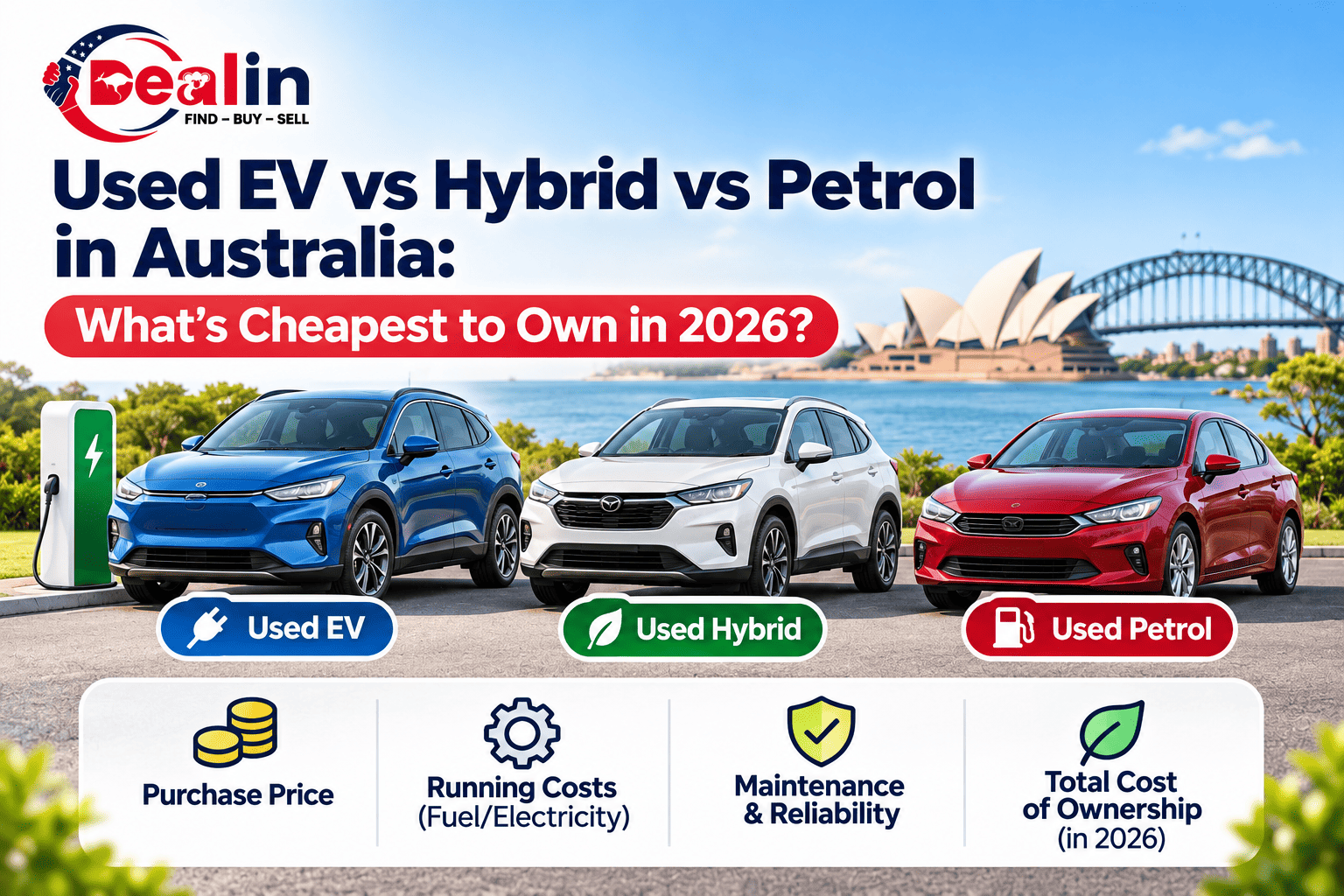
Used EV vs Hybrid vs Petrol Car in Australia: What’s Cheapest to Own in 2026?
Short answer? It depends. Anyone who says “EVs always win” or “petrol is still cheaper” is skipping the maths. Your real cost comes down to the purchase price, how far you drive, what you pay for fuel or electricity, servicing, and whether you can charge at home.
To keep things fair, I’ve compared all three using one example: 15,000 km a year over five years. The energy prices are assumptions as of November 2026, so swap in your own numbers before making a call.
At a Glance
| Cost or factor | Used EV | Used hybrid | Used petrol |
|---|---|---|---|
| Purchase price | Varies by model, age and battery | Varies by model and age | Widest range |
| Energy cost | Depends on charging method | Depends on fuel use | Depends on fuel use |
| Servicing | Model-specific, check records | Check hybrid system history | Check history and likely repairs |
| Best suited to | Drivers with easy charging | Mixed city and long trips | Tight budgets, flexibility |
| Key check | Battery health, warranty | Hybrid battery, service records | Mechanical inspection |
What Does “Cheapest Car to Run in Australia” Really Mean?
We’re counting purchase price, fuel or electricity, routine servicing and repairs, insurance, registration, tyres and depreciation. We’re leaving out finance interest and accessories. Costs shift with your model, state and driving habits, so treat this as a guide, not a quote.
Used Electric Cars in Australia: What to Know
Used electric cars in Australia can be very cheap to run, especially if you charge at home overnight. Public fast charging costs noticeably more, so access matters. If you rent, live in an apartment or park on the street, think hard about where you’ll actually plug in. A car that’s cheap on paper but awkward to charge gets old fast.
Buying second-hand electric cars in Australia? Run through this list:
- Ask for a battery health report, not just a “looks fine” from the seller
- Check how much battery warranty is left
- Make sure the charging port suits the chargers you’ll use
- Go through the service records
- Take a proper test drive, including a stretch at highway speed
Used Hybrid Cars in Australia: What to Know
Used hybrid cars in Australia shine in stop-start city driving, where the electric motor does a lot of the work. On long highway runs, the savings shrink. The upside is no range anxiety: fill up and go, same as always.
Check the service history carefully and ask about the hybrid battery’s condition. Hybrids are usually reliable, but a missing service record is a red flag. A good independent inspection is worth every dollar here.
Used Petrol Cars in Australia: What to Know
Petrol gives you the most choice and often the lowest sticker price. If you’re hunting for the cheapest car in Australia, or the best affordable cars in Australia for a tight budget, a used petrol model is often where the search starts. The catch is the fuel bill, and pump prices swing around by suburb and week.
Don’t trust fuel-economy claims on paper alone. Compare real cars, ask how they’ve been driven, and look closely at mechanical condition and servicing. Even the cheapest small SUV in Australia can cost more over time if it’s thirsty or poorly maintained. A well-kept petrol car can easily beat a neglected hybrid.
The Maths, Step by Step
Here’s the formula:
Annual energy cost = annual km ÷ km per unit of energy × price per unit
Our assumptions (illustrative, so check your electricity bill and a fuel price tracker):
- Used EV: 16 kWh/100 km (6.25 km per kWh). Home charging at 30c/kWh, public fast charging at 60c/kWh.
- Used hybrid: 4.5 L/100 km (about 22.2 km per litre) at $2.00/L.
- Used petrol: 8 L/100 km (12.5 km per litre) at $2.00/L.
| Scenario | Energy used | Annual cost | Five years |
|---|---|---|---|
| EV, home charging | 2,400 kWh | $720 | $3,600 |
| EV, public charging | 2,400 kWh | $1,440 | $7,200 |
| Hybrid | 675 L | $1,350 | $6,750 |
| Petrol | 1,200 L | $2,400 | $12,000 |
So an EV charged at home saves around $8,400 in energy over five years compared with petrol. The hybrid saves about $5,250. But if you rely on public chargers, the EV’s edge over a hybrid nearly disappears.
Here’s how the picture changes:
- Lower mileage: the savings shrink, so purchase price matters more.
- Higher mileage: efficient cars pull further ahead.
- City vs highway: hybrids do best in town, while EVs lose some efficiency at high speed.
- Home vs public charging: this is usually the biggest swing of all.
Remember, energy is only one slice of ownership. A cheaper-to-run car that costs $8,000 more upfront might not come out ahead after five years.
Which One Might Suit You?
- Consider a used EV if you can charge conveniently and the range covers your regular trips.
- Consider a used hybrid if you want fuel savings but need petrol’s flexibility.
- Consider a used petrol car if upfront budget, model choice or long-distance freedom matters most.
Your Used-Car Buying Checklist
- Inspect the car in daylight and take it for a test drive
- Review the service records
- Check the vehicle’s history
- Book an independent inspection
- Confirm all costs before you pay
For EVs and hybrids, add a separate battery health check.
Ready to Find Your Next Car? Start on Dealin Classifieds Ads
You’ve seen the numbers. Now it’s time to see the cars.
Dealin is a place to buy and sell online in Australia, with local classified ads from real sellers near you. Whether you’re chasing low running costs with a used EV, balancing fuel savings and flexibility with a hybrid, or keeping the upfront budget tight with a petrol, the best way to compare is to look at real cars side by side.
On Dealin Motors, you can:
- Browse used EVs, hybrids and petrol cars in one place
- Compare prices, kilometres and listing details
- Contact sellers directly and ask about service history
- Arrange an inspection before you commit
Browse used cars on Dealin Motors →
Found one you like? Message the seller today and book an inspection. Selling instead? You can post free classified ads in Australia on Dealin and reach local buyers.
Cost figures are illustrative, dated November 2026. Actual costs vary by vehicle, location and driving habits.
FAQs
Related Item
Written By
This article is by the Dealin Team — the editorial crew at Dealin, Australia's classifieds platform for buying and selling across Motors, Property, Jobs, Marketplace, Services, and Business For Sale. We write for everyday Australians navigating the classifieds space. Have a question, or would you like us to cover a specific topic? Email us at info@dealin.com.au .


