

 Marketplace
 Jobs
Jobs Motors
 Property
 Services
 Business For Sale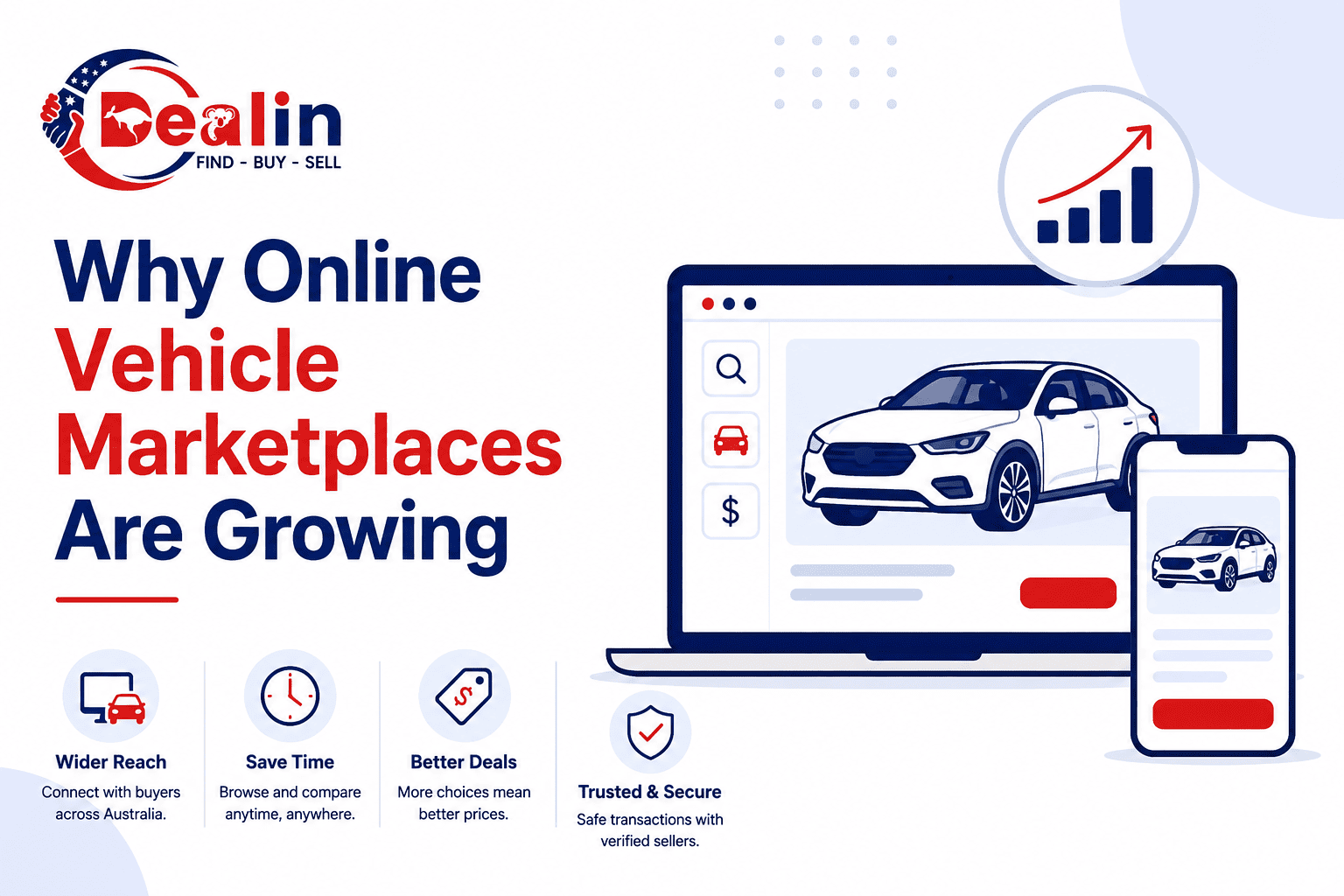


Why Online Vehicle Marketplaces Are Growing
Something changed while the industry wasn't paying attention. The old system of relying on advertising in the local paper and a cardboard sign in the rear windscreen is no longer required as listings are being sold without even leaving the lounge room. Those dealerships that failed to get the message that digital channels are essential for years are racing to create them. And buyers — particularly younger ones — have stopped treating a showroom visit as step one.
The online automotive marketplace expansion in Australia isn't a trend that's coming. It's already here, and the numbers behind it are harder to ignore every quarter.
The Scale of What's Actually Happening
Online car sales in Australia were valued at USD $10 billion in 2024. Forecasts from IMARC project that figure reaching USD $24.8 billion by 2033 — a compound annual growth rate of 9.5%. That's not modest growth. That's a market nearly tripling in under a decade.
Australia's pre-owned vehicle market reached USD $77.2 billion in 2024, with forecasts pointing toward USD $197 billion by 2033. The used side of the market is growing faster than new — and digital platforms are increasingly how those transactions begin and, more often than before, how they end.
Australia recorded 1,241,037 new car sales in 2025 — the third consecutive record year — with EV deliveries up 13.1% year-on-year. That kind of sustained volume creates a continuous pipeline of trade-ins and private resales feeding directly into the used market. More new car sales today means more used car listings six months from now.
What's Driving Buyers Online
The honest answer is convenience, but that word undersells it.
Buyers aren't just going online because it's easier. They're going online because the tools have genuinely gotten better. Relevant cars pop up in the first page of recommendations based on browsing history instead of scrolling through irrelevant results. Mobile-first platforms mean someone can shortlist three cars on lunch break without opening a laptop. And 360-degree vehicle views, virtual showrooms, and digital financing pre-approval mean a buyer can get most of the way to a decision without stepping outside.
Online channels are currently the fastest-growing sub-segment of Australia's used car market, expanding at a 14.35% CAGR through to 2031 — outpacing almost every other sales format. That gap between online and offline growth rates is only widening.
Speed and transparency are the other pieces. Buyers who remember spending weekends driving between dealerships to compare prices have quickly adapted to platforms where that comparison takes minutes. Sellers have noticed. The time it takes a good price, good photos listing to receive enquiries has substantially decreased for platforms that have focused on improving their UX.
SUVs, Utes, and the Buyers Who Want Them
SUV share of new sales rose to 60.7% in 2025, up from 57% in 2024, while passenger vehicle share dropped to 13%. That change is important for online marketplaces because SUVs and dual cab ute models are what people are searching for most.
SUVs held a 49% share of used inventory by mid-2024, up from 40.7% in early 2020. The Ford Ranger and Toyota HiLux consistently top the best-seller lists, new and used. These are practical vehicles with broad appeal, which means the audience searching for them online is enormous — and platforms that carry strong SUV and ute inventory tend to attract more engaged buyers.
Electric vehicles are also quietly building their presence in the used market. Used EV sales were up 65% year-on-year and 120% over the preceding two years — still a small share of total stock, but the trajectory is clear. Within a few years, EVs will be a normal category in any serious used car marketplace.
Why Private Sellers Are Making the Shift
This is where the rise of digital car buying platforms is perhaps most visible.
Private sellers used to face a real friction problem. Reaching enough buyers meant paying for multiple listings across multiple platforms, fielding calls at odd hours, and dealing with tyre-kickers who had no intention of buying. The alternatives — trading in to a dealer or selling through a car-buying service — meant leaving money on the table.
Online classifieds platforms have changed that calculation. A single, well-structured listing now reaches a national audience. Enquiries come through built-in messaging rather than personal phone numbers. And because platforms increasingly support features like digital financing and documentation, serious buyers arrive more prepared than they used to.
Platforms like Dealin give private sellers across Australia a practical channel to list vehicles alongside other categories — property, jobs, and general classifieds — which means a wider reach without the overhead of dedicated automotive marketplaces that charge accordingly. The private seller who might have settled for a trade-in value three years ago is now listing their own vehicle, setting their own price, and handling enquiries on their terms.
The Platform Features That Actually Matter
Some online car marketplaces are better than others, and car shoppers are becoming savvy to the distinction.
Virtual showrooms and 360-degree image formats aid in vehicle evaluation prior to the actual visit. Integrated vehicle history reports mean the conversation about a car's past doesn't start awkwardly in a driveway. Digital finance pre-approval filters window-shoppers from genuine buyers — and sellers notice.
AI-driven pricing tools are also becoming standard. A seller unsure whether to list at $28,000 or $32,000 can now get market-based guidance before they publish. That reduces the friction of pricing conversations and tends to produce faster, less contentious negotiations.
Mobile-first UX is no longer a secondary experience on the better platforms — it's primary. Most vehicle searches now happen on a phone. Platforms that haven't prioritised mobile UX are losing buyers before they even see the inventory.
A Market With Room Left to Run
Offline formats still controlled 75.21% of used car transactions in 2025. That number is the real story here.
Digital channels are growing at roughly 14% annually, but three-quarters of the market hasn't moved online yet. That's not a problem — it's an opportunity. As platform quality continues to improve and older buyer demographics become more comfortable with fully digital purchases, that offline share will compress. The question for sellers and platforms isn't whether to invest in online presence, but how quickly.
For anyone selling a vehicle in Australia right now — private seller, small dealer, or fleet operator — the audience has already shifted online. The listing still needs to be priced correctly and presented well. But the first step is being where buyers are looking.
FAQs
Written By
This article is by the Dealin Team — the editorial crew at Dealin, Australia's classifieds platform for buying and selling across Motors, Property, Jobs, Marketplace, Services, and Business For Sale. We write for everyday Australians navigating the classifieds space. Have a question, or would you like us to cover a specific topic? Email us at info@dealin.com.au .


