
 Marketplace
 Jobs
Jobs Motors
 Property
 Services
 Business For Sale
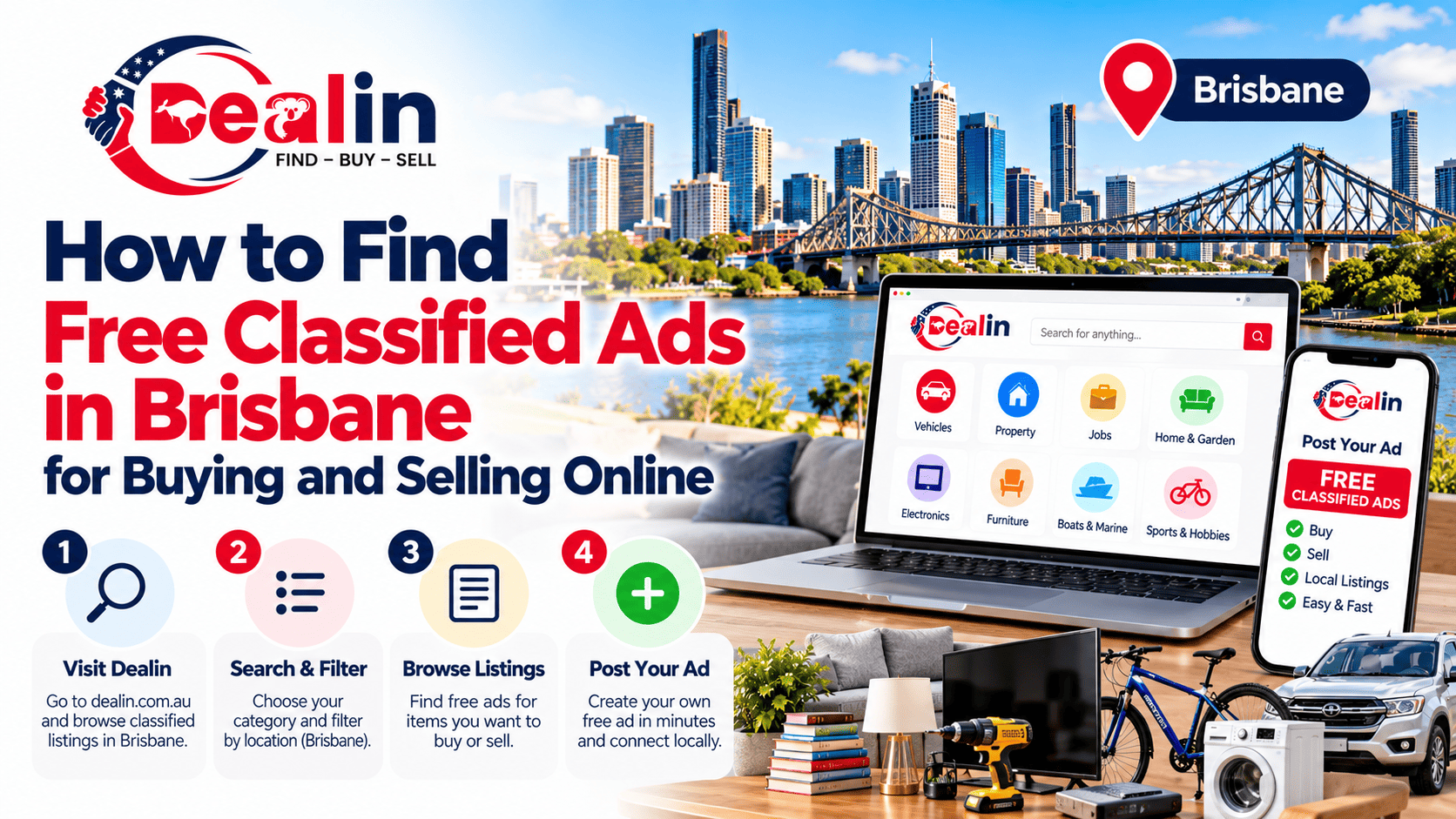


How Local Service Providers Can Get More Leads Online
Walk into any suburban street in Australia and you'll find two types of local service providers operating side by side. The one has a regular flow of work, referrals flow in, and they can be found online with little effort. The other's as talented, as dependable, and defiant of silence. The gap between them is almost never about capability. It's almost always about how they present themselves and where they show up when someone in their area is looking for what they offer.
Local business lead generation isn't a mystery, but it does require a shift in thinking for a lot of sole traders and small operators who built their reputation through word of mouth and are finding that word of mouth alone doesn't scale the way it used to. The customers are still out there — they're just starting their search online now instead of asking a neighbour, and if you're not visible where they're looking, someone else is getting the call.
Your Google Business Profile Is the Most Underused Tool in Local Services
If you provide any kind of local service — cleaning, gardening, electrical, plumbing, beauty, personal training, pest control, anything — and you haven't claimed and fully completed your Google Business Profile, that's the first thing to fix. It costs nothing. It takes about an hour to set up properly. And it puts your business on Google Maps and in the local search results that appear when someone types "electrician near me" or "cleaner in Ballarat" into their phone.
The profile that actually generates leads isn't the one that's been half-completed and abandoned. It's the one with:
- A clear service description
- Your actual operating hours
- Photos of your work or your team
- A genuine phone number and website link
- Recent customer reviews — Google's local ranking algorithm weights reviews heavily, both in terms of volume and recency
A profile with forty reviews from three years ago and nothing recent signals to the algorithm that the business might not be active. Five recent reviews in the last ninety days is more valuable than twenty older ones.
Getting reviews isn't as awkward as most operators think. The simple approach works: after a job is done well, send a quick text or email with a direct link to your Google review page and a one-line message asking if they'd be willing to share their experience. Most satisfied customers are happy to help — they just need to be asked and given a frictionless way to do it.
Being Specific About What You Do and Where You Do It
One of the most consistent mistakes in digital promotion for local businesses is being too general. "Handyman services available" is less effective than "Fence repairs, pergola installations, and minor carpentry for homeowners in the Inner West and Canterbury-Bankstown areas." The second version tells a potential customer exactly whether you're relevant to them, signals that you know your trade specifically, and includes the geographic information that helps local search algorithms surface you to the right people.
This specificity principle applies everywhere your business has an online presence:
- Your Google Business Profile
- Your website or Facebook page
- Your listings on classifieds platforms
The operators who attract more service customers consistently are the ones who've thought carefully about which services they're genuinely good at and which suburbs or regions they want to work in, and communicated that clearly rather than trying to be all things to everyone.
The geographic piece matters more than most local service providers appreciate:
- "Plumber" is a crowded search term.
- "Plumber Frankston" is more specific.
- "Hot water system replacement Frankston" is more specific still — and the person searching for that exact phrase is much closer to booking than the person searching for "plumber" who might just be doing initial research.
Being visible for the specific, intent-driven search terms that reflect what your best customers actually type is worth more than broad visibility for general terms where you're competing with every operator in the state.
Building a Presence That Compounds Over Time
The best-performing local service businesses in Australia in 2026 have built multiple layers of online visibility that reinforce each other:
- Google Business Profile
- A simple website or well-maintained Facebook page
- Listings on relevant local platforms
- A handful of genuine customer reviews across different sites
None of these individually is transformative, but together they create a presence that compounds. A potential customer might see your Google listing, check your Facebook page, find your classifieds listing, and feel confident enough to make contact. Remove any one of those layers and you've lost part of the credibility chain.
Local business lead generation through this kind of layered approach is slower to build than paid advertising but far more durable. A well-optimised Google profile doesn't stop generating enquiries when you stop paying for it. A classifieds listing that's regularly updated keeps producing visibility without the ongoing cost of a Google Ads campaign. For a sole trader or small operator managing their own marketing between jobs, that durability matters — you need your online presence to work while you're busy working, not just when you have time to actively manage it.
Paid advertising has its place, particularly for newer businesses trying to build initial pipeline before organic visibility kicks in. But Google Local Services Ads — which appear above standard search results and are specifically designed for local service providers — are worth understanding before jumping into standard Google Ads, because the cost model and the lead quality tend to be better suited to local service businesses.
Why Dealin Makes Specific Sense for Local Service Providers
The challenge with most digital promotion options for local service businesses is that they're either expensive, complex, or designed for national-scale businesses rather than a sole trader operating within a thirty-kilometre radius. Dealin's Services category addresses that gap in a way that's specifically useful for the kind of operator this post is written for.
When a local service provider lists on Dealin, they're reaching people who are actively searching for services — not scrolling through a social media feed where an ad interrupts something else they're doing. Someone browsing Dealin's Services category has intent. They're looking for a provider in their area, they want to find someone local, and they want to make contact relatively quickly. That's a fundamentally different audience quality from a social media ad impression, and it matters for how quickly a listing converts to an actual enquiry.
The suburb-level relevance of Dealin's listings is the other practical advantage. A cleaning business listing on Dealin can specify the suburbs they service, which means the enquiries they attract are geographically qualified before the first contact. For a mobile service provider who has a real preference for working within a defined area — to manage travel time, to build density of work in a local area, to establish a neighbourhood reputation — that geographic filtering is genuinely useful. You're not fielding enquiries from forty kilometres away from customers who'd balk at a travel surcharge.
The cost to list on Dealin Services category is a flat fee — accessible and predictable for a small operator who needs to know what their marketing is costing them without surprises. It's worth checking current rates directly on Dealin's site, but the structure is designed for individual service providers and small businesses, not just commercial operators with large advertising budgets. For a tradie, cleaner, gardener, or personal service provider trying to attract more service customers without spending hundreds of dollars a month on advertising platforms, a flat listing fee that delivers local, intent-driven visibility is a straightforward value proposition.
The Follow-Up That Most Providers Forget
One of the most reliable ways to generate more local service business doesn't involve any platform or advertising tool at all — it's simply following up past customers with a brief, friendly message at a relevant time. For example:
- A gardener who messages their regular customers in August about spring clean-up bookings.
- A painter who checks in with clients two years after a job to see if they're thinking about refreshing another room.
- A cleaner who reaches out after a gap in bookings to see if they can help.
This kind of proactive communication feels uncomfortable for a lot of operators because it feels like asking for something. It isn't. A customer who had a good experience with your service genuinely appreciates a reminder that you're available — it saves them the effort of finding someone else. The conversion rate on a follow-up to a satisfied past customer is consistently higher than on any cold outreach to a new one, because the trust has already been established.
Local business lead generation is ultimately a combination of being visible to new customers and remaining present to existing ones. Both matter, and the operators who manage both consistently are the ones who stay busy regardless of what the broader economy is doing.
If you provide local services and want a platform where the leads are local, the audience has real intent, and the listing cost is predictable, list your services and start generating local enquiries on Dealin — it's a practical step that more than a few Australian service providers have found genuinely useful.
FAQs
Written By
This article is by the Dealin Team — the editorial crew at Dealin, Australia's classifieds platform for buying and selling across Motors, Property, Jobs, Marketplace, Services, and Business For Sale. We write for everyday Australians navigating the classifieds space. Have a question, or would you like us to cover a specific topic? Email us at info@dealin.com.au .


