
 Marketplace
 Jobs
Jobs Motors
 Property
 Services
 Business For Sale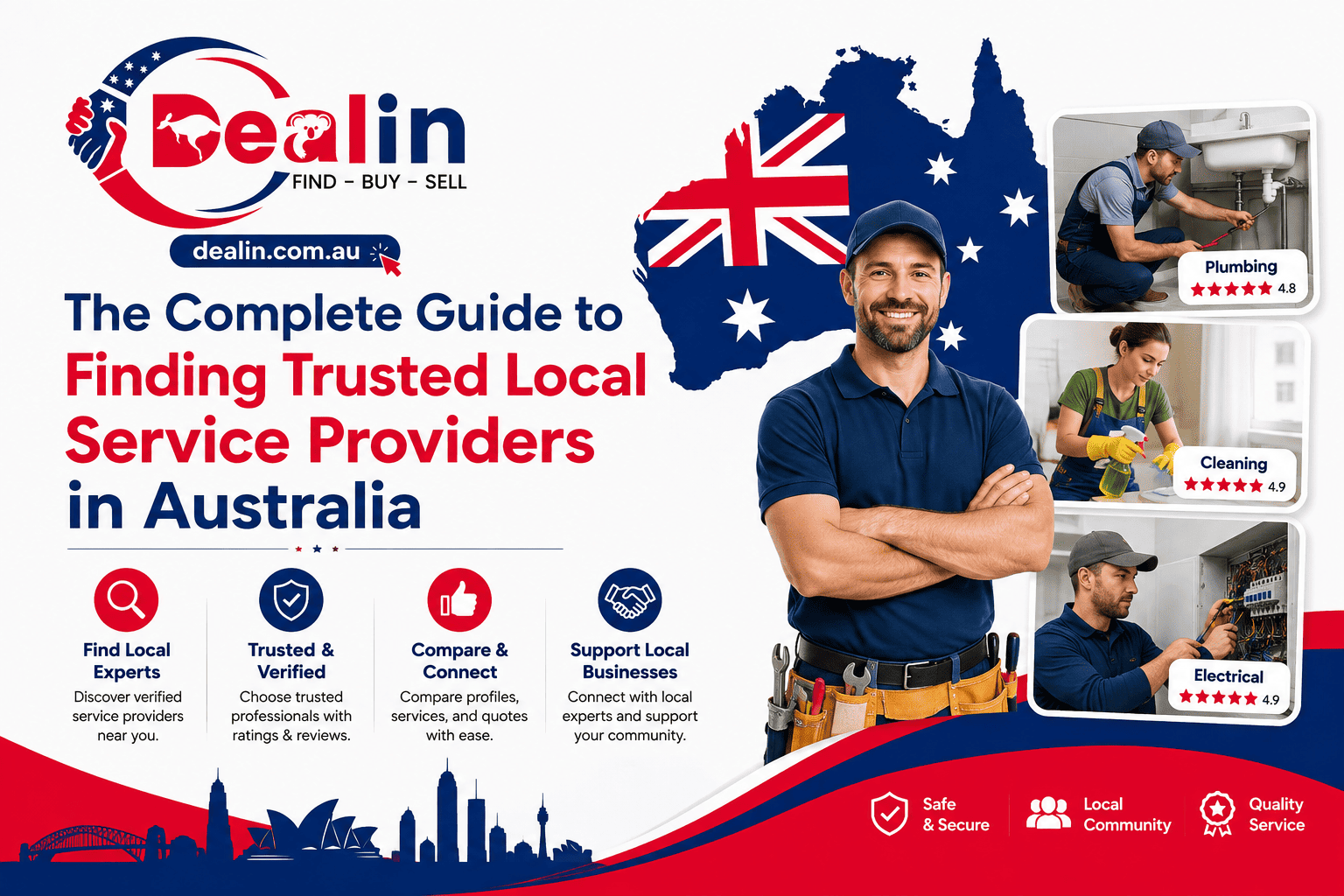




The Complete Guide to Finding Trusted Local Service Providers in Australia
Everyone has a story. The plumber who quoted $180 and invoiced $650 once the job was "more complicated than expected." The removalist who no-showed on moving day with zero notice. The handyman whose "good enough" work started falling apart within a month. Finding someone you can actually rely on — a tradie, cleaner, removalist, gardener, or anyone else you invite into your home — isn't as straightforward as it should be.
Being ripped off after the job's done, short-notice cancellations, work done wrong without you noticing until it's too late, or contractors who aren't properly licensed or insured — these aren't isolated incidents. For most Australians, at least one of those stories is their own.
This guide walks through how to navigate hiring contractors online and find trustworthy local service providers — checking references and credentials, spotting scams, and avoiding the most common pitfalls. None of it is difficult once you know what to do.
Why Trust Matters More for Services Than Products
When you buy a faulty product in Australia, Australian Consumer Law gives you clear rights — repair, replace, or refund. Services don't work that way, which is exactly why vetting matters so much more here.
You can't "return" a bad service the way you return a faulty toaster. If a tiler botches your bathroom floor, you're negotiating a rectification or paying someone else to fix it, not getting a replacement bathroom. If a builder walks off mid-job, you're chasing money through consumer affairs or a tribunal, not clicking "refund."
Licensing and insurance risks compound in ways people don't think about until it's too late. Unlicensed electrical or plumbing work can genuinely void your home and contents insurance, because most policies exclude damage from non-compliant work. A house fire traced to DIY wiring by an unlicensed "electrician" can leave you covering the full repair cost with no payout. That's why licensed electricians and licensed plumbers aren't just a legal requirement — they're financial protection for the homeowner.
Where to Start Looking
Where you begin shapes everything that follows, so it's worth being deliberate rather than defaulting to whichever result has the most ad spend behind it.
Local classifieds and marketplace platforms are increasingly the most practical starting point, especially ones built around genuine local relevance rather than a generic national feed — you see providers actually in your area, listing their services directly, with listings you can compare side by side rather than relying on whoever paid the most for placement.
Word-of-mouth and community recommendations remain genuinely valuable, and shouldn't be dismissed as old-fashioned. A neighbour who's had consistently good experiences with a particular gardener, or a local Facebook group where people share real, recent experiences with tradies, carries a kind of accountability anonymous online reviews sometimes lack — the recommender has skin in the game, since they're vouching for someone to people they'll see again.
Trade associations and state-based licensing boards are an underused resource. Every state has a licensing body for regulated trades — the relevant state fair trading or building authority — and most maintain free, publicly searchable registers of licensed operators. This is genuinely the most authoritative source for confirming someone is who and what they claim to be.
Google Business Profile and reviews round out the picture, giving you a sense of a provider's public reputation, response patterns, and how they handle both praise and criticism — which matters more than the star rating alone.
How to Verify a Service Provider's Credentials
This is the step most people skip — and the one that actually prevents the worst outcomes.
Licensing in Australia is state-based, not national. Electricians, plumbers, builders, gasfitters and similar trades must hold a valid licence from their state authority:
- NSW Fair Trading — for New South Wales
- Victorian Building Authority (VBA) — for Victoria
- QBCC — for Queensland
- And equivalents elsewhere
Most of these sites offer free licence lookup by name or number, so verify before engaging anyone.
Ask for proof of insurance before work begins — public liability, and workers' compensation if they have staff. A legitimate operator has this ready and won't hesitate to share it; reluctance is itself a warning sign. Without public liability cover, you could be personally liable for an injury on your own property during someone else's work.
Verify the provider's ABN through the free ABN Lookup tool. It confirms the business is genuinely registered, shows how long it's operated, and can reveal whether the entity name matches what you were quoted under — worth asking about if it doesn't.
For specialised work — gas fitting, solar installation, structural jobs — confirm any certifications beyond the base licence. A legitimate specialist explains these without hesitation.
Reading Reviews the Right Way
Most people misread reviews and get misled by exactly the signals that should raise suspicion.
Favour detailed, specific reviews over generic ones. "Great service" tells you nothing; "arrived on time, gave an itemised quote, fixed it in 90 minutes and cleaned up" tells you a lot — specificity signals a genuine review, since fabricated ones tend to stay vague.
Check recency and volume, not just the star average. A 4.8 from 200 reviews spread across three years is a very different signal from a 5.0 from six reviews all posted the same week — the latter often means solicited or purchased reviews.
Watch for patterns, not single complaints. One late arrival might be a bad day; a recurring theme across many reviews about lateness or scope-creep pricing is a genuine red flag regardless of the overall rating.
Be wary of providers with only 5-star reviews and zero negative feedback — no business is perfect, and a spotless, similarly-worded review history often signals manipulation rather than quality.
Red Flags When Hiring Locally
A handful of consistent warning signs show up across almost every bad experience Australians report with local service providers, and recognising them early can save real money and stress.
- Full payment demanded upfront before work starts is one of the clearest red flags. A proper provider delivering good results won't ask for the money in advance — complex jobs get a deposit, simple ones get paid on completion.
- No findable fixed address, ABN, or business registration is a serious concern beyond very casual, low-stakes jobs.
- Pressure to skip a written quote or contract — "let's just shake on it" — removes your documentation if a dispute arises later; even a simple text or email outlining scope and price gives you something concrete to point to.
- Reluctance to provide references or examples of past work is worth taking seriously — a genuine track record is something providers are usually happy to show.
- Prices well below the industry average deserve scrutiny rather than excitement — sometimes it reflects genuine efficiency, but just as often it means corner-cutting on materials, unlicensed work to dodge insurance overhead, or a plan to make up the difference through scope-creep charges once the job is underway.
Getting Quotes and Paying Safely
Get at least two to three quotes before committing to anything beyond a modest job — standard practice that experienced tradies expect. Ask for itemised quotes rather than a vague lump sum, so you can compare providers meaningfully and have a reference point if the final invoice drifts from what was agreed. Confirm upfront what's included — materials, labour, callout fees, disposal — and whether the price is fixed or could change if the job reveals complications.
How you pay matters almost as much as who you hire:
- Avoid paying the full amount upfront for anything beyond a small job — for larger projects, a deposit plus a midpoint payment plus a final balance on completion keeps leverage in your hands throughout.
- Keep every message, quote, and receipt — this documentation is the single most useful thing you can have if a dispute arises.
- Use traceable payment methods; a provider insisting specifically on cash for a large job is sometimes avoiding a paper trail.
Platform Features That Help Buyers Find Trusted Providers
The right platform reduces the effort in all of the verification steps above. Look for:
- Provider verification or licensing information built into listings
- A review system that reflects genuine feedback rather than one that's easily gamed
- A way to message providers directly through the platform — creating a documented record alongside your own
This is where Dealin's structure helps. Dealin's Services category is built around local, direct connection — you're seeing providers actually operating in your area, with category-specific listing details rather than a vague, generic post. That makes it considerably easier to compare providers on what actually matters: what they do, where they operate, and what past customers have said.
For providers themselves, Dealin runs on a flat listing fee rather than a commission on completed jobs — check current rates on Dealin's site for the latest figures. That means local tradies and small operators aren't inflating their prices to cover a platform's percentage cut, so prices on a flat-fee platform tend to reflect genuine market value rather than built-in overhead.
Already know what you need? Browse local service providers on Dealin →
What to Do If Something Goes Wrong
Even thorough research doesn't guarantee a perfect outcome, so it helps to know the first steps.
Photograph the work (or lack of it) and keep every message, quote, and invoice — the more thorough your documentation, the stronger your position in any dispute. Contact your state's consumer affairs or fair trading department early rather than as a last resort:
- Consumer Affairs Victoria
- NSW Fair Trading
- Queensland's Office of Fair Trading
- And equivalents elsewhere
These agencies can often help directly or investigate complaints against licensed tradespeople. If you found the provider through a platform, report the issue there too — even without formal mediation, it protects other buyers and creates a record. For disputes that can't be resolved directly, most states have an accessible tribunal system for smaller civil claims:
- NCAT — New South Wales
- VCAT — Victoria
- QCAT — Queensland
- And equivalents elsewhere
Quick Checklist: Vetting a Local Service Provider
- Licence checked against your state's official register (for regulated trades)
- Proof of public liability insurance sighted or confirmed
- ABN verified via ABN Lookup
- Reviews read for specificity, recency, and volume — not just star rating
- At least two to three itemised quotes obtained and compared
- Written quote or agreement in place before work begins
- Payment structure agreed as deposit-plus-progress, not full amount upfront
- No pressure tactics, unusually low pricing, or reluctance to provide references
Conclusion
Hiring locally in Australia doesn't have to be a gamble, even though it can feel that way after a bad experience. The overwhelming majority of tradies, cleaners, removalists, and service providers are legitimate, licensed where required, and good at what they do. The goal here isn't paranoia — it's a straightforward, repeatable process that filters out the small minority who cause the problems everyone's heard stories about.
Check the licence. Confirm the ABN. Read reviews properly. Get more than one quote. Keep records. None of it takes long once it's a habit, and it's the difference between hiring with confidence and hiring on hope.
If you're ready to find a local handyman, electrician, removalist, or any other service provider near you, browse local service providers across Australia on Dealin — a practical starting point for connecting directly with genuine local operators in your area.
FAQs
Written By
This article is by the Dealin Team — the editorial crew at Dealin, Australia's classifieds platform for buying and selling across Motors, Property, Jobs, Marketplace, Services, and Business For Sale. We write for everyday Australians navigating the classifieds space. Have a question, or would you like us to cover a specific topic? Email us at info@dealin.com.au .


