
 Marketplace
 Jobs
Jobs Motors
 Property
 Services
 Business For Sale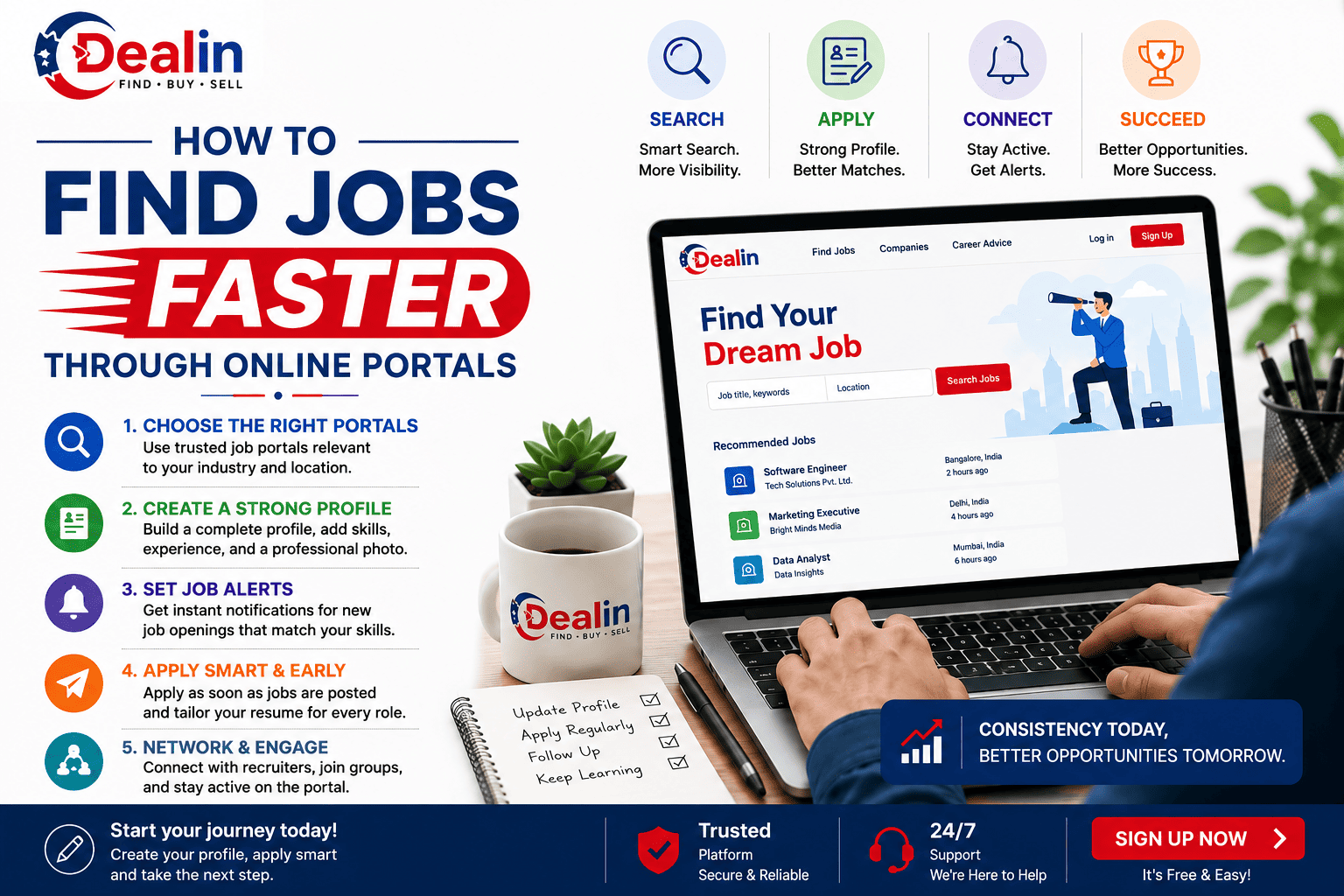



How to Find Jobs Faster Through Online Portals
Let's be straight about something. It's rarely about qualifications. Most people who struggle to land interviews aren't underqualified — they're just moving too slowly in a market that doesn't wait around. Checking listings every few days, rebuilding a CV from scratch for each application, sending off something to a role that got internally shortlisted two weeks ago. No wonder it feels like running uphill in wet boots.
But here what's interesting. Across Australia right now — from Brisbane logistics firms to Sydney fintech startups to remote-friendly businesses hiring from Adelaide or Canberra — companies are moving faster than ever. Roles get posted, shortlisted, and filled in days sometimes. Not weeks. The people keeping pace with that speed are getting hired. The ones who aren't, keep wondering what they're doing wrong.
Online job portals are where this race plays out. Whether you win it comes down to how you use them.
The Honest Problem With How Most People Search
There's a pattern that shows up constantly. Someone decides they're ready for a new role, lands on a general board, punches in something vague, scrolls for twenty minutes, gets nowhere useful, and shuts the laptop. Three weeks later, still nothing.
Sound familiar? It does to a lot of people.
The trap is that job search has become window shopping — passive, leisurely, when the mood takes you. It doesn't work that way. Deep down, most people know it. What works is treating it like a project with real deadlines and daily checkins.
Here's a real world change that has a big impact: jobs posted today get converted to interviews at a much higher rate than jobs posted a week or two ago. For recruiters, shortlists are often determined within 48 to 72 hours of a role going live. If you're finding jobs three or four days after they're posted, you're frequently too late — not because you're unqualified, but because the pile is already reviewed.
Part time job alerts and real-time notifications solve this directly. Platforms like Dealin Jobs surface fresh listings as they drop, which means you're seeing roles when they actually matter. Set those alerts up on day one and check them every morning before you do anything else.
Different Portals Serve Very Different Purposes — Know Which Is Which
Not every platform is built for every kind of job. This sounds obvious, but people waste weeks applying on the wrong channels and then wonder why nothing's sticking.
Seek Jobs Australia remains the dominant general board for full-time, white-collar, and trade roles. Volume is enormous. So is competition. On popular listings in Melbourne or Sydney, hundreds of applications land within the first 24 hours — which means your CV needs to be doing real work, not just ticking boxes.
For anyone leaning toward flexibility, freelance jobs online have moved well beyond the gig-economy clichés. Accountants, project managers, UX designers, legal consultants — serious professionals are building entire careers on project-based platforms now. Deloitte's research from 2025 put Australia's independent workforce at over 4.1 million people, and that number is climbing. It's no longer a fallback option; for plenty of people, it's the actual goal.
The remote jobs portal space has also matured in ways that genuinely level the playing field. A nurse practitioner in Townsville, a software developer in Launceston, a marketing manager in Bendigo — geography used to cap your options. It increasingly doesn't. Remote jobs hiring now include everything from graduate roles to senior leadership positions, and hybrid arrangements (two or three days from home, the rest in office) have become standard rather than exceptional.
Then there are niche boards targeting high paying jobs online — cybersecurity, data science, mining engineering, investment banking, executive leadership. They're not always the first places people look but they are often where the better quality roles lie. Companies in these industries look at targeted channels because they want pre-filtered candidates, not open-call candidates.
And more and more AI jobs online portal features are doing active matching work under the hood — analysing your profile, search behaviour and skills to surface roles you might not have found manually. The more complete and specific your profile is the better this works out. Vague profiles get vague matches.
Building a Profile That Actually Does Work for You
Most people treat their online profile as an afterthought. Upload a CV, fill in the bare minimum, and move on. That's a mistake.
A properly built profile on any major apply for jobs online platform works in two directions. You apply to jobs, yes — but employers and recruiters are also actively searching for candidates. Skills keywords, location preferences, availability, salary expectations — all of this makes you discoverable. If your profile is thin or generic, you're invisible to that inbound traffic.
Spend two to three hours doing this properly once. Lead with what you actually bring to the table, not "experienced professional" but something like "Senior Project Manager | Infrastructure & Construction | Open to Remote" or "Marketing Strategist | B2B SaaS | Melbourne-Based, Hybrid Ready". Be specific. Specific profiles get surfaced. Generic ones don't.
Update it every few weeks too. Active profiles are prioritised by most platform algorithms. A profile last updated six months ago signals inactivity, even if you're actively searching.
Entry Level, Career Changers, and the Art of Not Talking Yourself Out of Applying
Entry level jobs online have become genuinely competitive in Australia's major cities. Graduates and career changers often face the same dilemma: how do you make a difference when you don't have a direct track record?
The actual answer is that employers at this level are often hiring for aptitude and cultural fit rather than credentials. Volunteer experience matters. University projects do matter. Internships count, even short ones. The error is to write a CV that reads like an apology ("I haven't got much experience but…") rather than a confident statement of what you can offer.
Specifically for career changers: lead with transferable skills and be explicit about the pivot. Don't make the hiring manager guess. A former teacher moving into corporate training doesn't need to downplay seven years in a classroom — that experience is directly relevant, just framed differently.
One more thing worth saying: apply for the role even if you don't tick every single box. Job descriptions are frequently wish lists, not minimum requirements. If you meet 70–75% of what's listed and the role genuinely interests you, apply. The worst outcome is silence, and that was already the outcome if you didn't apply at all.
How to Move Fast Without Becoming Sloppy
Speed and quality are not mutually exclusive — but you do need a system to achieve both.
Have 3–4 CVs tailored to the job in hand. One for corporate or professional services jobs, one for technical, one for creative industries, one general-purpose version. The core is the same, but the summary and skills section is tweaked. Doing this once saves you from a painful rewrite every single time.
Do the same with cover letters. Build a solid template with a strong opening and closing that barely changes, and two modular middle paragraphs you swap out per role. The whole thing should take fifteen minutes maximum once you've built the base. Recruiters aren't reading these at length — your first two sentences either earn their attention or you've lost them.
For work from home jobs in 2026, also be prepared to address your remote setup briefly. A short line about your home office, reliable internet, and experience with async communication goes further than people expect. Remote hiring managers are screening for self-management as much as anything else.
The Follow-Up No One Does (But Should)
Send a short follow-up five business days after applying. Something like: "Wanted to quickly follow up on my application for [Role Title] I applied for last week. I am very interested in [Company] and would love to have a chance to chat more when you have a moment."
That's it. No lengthy re-pitch, no pressure. Just a professional nudge that puts your name back in front of someone at a moment when the pile of applications has already faded from view.
Most candidates don't do this. Those who do get noticed, which tells you something.
Final Thoughts
Job hunting is uncomfortable. It involves rejection, silence, and the particular anxiety of uncertainty — and no article is going to make those feelings disappear. But the practical mechanics of a job search are genuinely learnable, and the tools available to Australian job seekers in 2026 are better than they've ever been.
All of this exists and it works, real time alerts for jobs hiring near me now, specialist remote jobs portals, freelance platforms with constant work, AI-based matching that brings up jobs you'd never find manually. The edge goes to those who are consistently present, move quickly on the best listings and show some care in their online presentation.
If you're ready to put this into practice, Dealin has you covered.
Every day brings new listings across every category — remote jobs hiring now, AI jobs, work from home jobs, part time job alerts, freelance jobs online, high paying jobs online, jobs near me hiring now — all in one clean, fast platform built for how people actually search in 2026.
The market moves fast now — but the people who move first are still the ones getting hired. Set your alerts, polish your profile, and start applying while the opportunities are fresh. Browse Today Listings on Dealin Jobs.
FAQs
Written By
This article is by the Dealin Team — the editorial crew at Dealin, Australia's classifieds platform for buying and selling across Motors, Property, Jobs, Marketplace, Services, and Business For Sale. We write for everyday Australians navigating the classifieds space. Have a question, or would you like us to cover a specific topic? Email us at info@dealin.com.au .


